Roasted Marshmallow: A Simple and Beautiful Script Font for Modern Designers
In a digital world saturated with sterile sans serifs and predictable serifs, there's a profound hunger for the authentic, the handmade, and the personal. We see it in the resurgence of craft goods, the popularity of artisan branding, and the desire for designs that feel like they were made by a human hand, not a machine. This is precisely where a typeface like Roasted Marshmallow finds its power. It’s not just another script font; it’s a conduit for warmth, approachability, and genuine connection. For the designer, entrepreneur, or creative professional, understanding how to harness this tool is key to crafting visuals that truly resonate.
The Visual Personality of Roasted Marshmallow
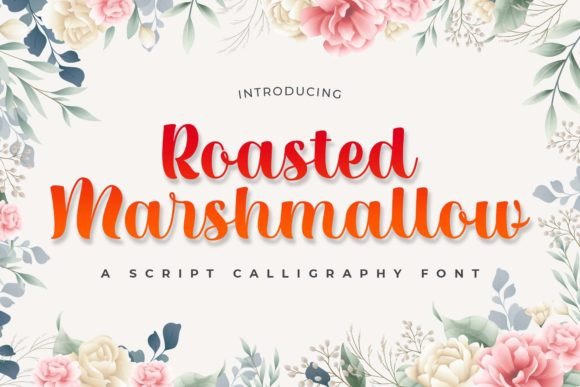
At first glance, Roasted Marshmallow presents a beautifully balanced simplicity. Its letterforms flow with a natural, handwritten cadence that avoids the extremes of overly formal calligraphy or childish scrawl. The strokes have a consistent, medium weight, giving it a sturdy presence on the page or screen. There’s a subtle, organic irregularity—the slight variation in baseline, the gentle imperfections in curves—that is the hallmark of a truly handwritten font. This isn't a typeface that tries to be perfect; it embraces the charm of the imperfect.
Its personality is decidedly friendly, approachable, and versatile. It doesn't scream for attention with wild flourishes but rather invites you in with a quiet confidence. Think of it as the typographic equivalent of a warm welcome. This makes it an exceptionally creative font for projects where building trust and rapport is essential. It carries a modern sensibility, avoiding the dated feel of some script fonts, which allows it to integrate seamlessly into contemporary design trends while maintaining its timeless, handmade appeal.
Where Roasted Marshmallow Truly Shines: Practical Applications
The true test of any premium font is its application. Roasted Marshmallow excels in scenarios where a personal touch elevates the message. For logo design, it’s a natural fit for businesses that want to project approachability—think boutique bakeries, independent coffee shops, lifestyle blogs, handmade skincare lines, or personal coaching services. The font instantly communicates a brand identity built on authenticity and care.
In the realm of packaging design, it can transform a product. Imagine it on a artisanal jam label, a candle box, or a small-batch chocolate wrapper. It adds a layer of perceived craftsmanship and value. For wedding designs and stationery, it’s a classic choice for invitations, menus, and thank-you cards, offering elegance without stuffiness. The font’s clarity also makes it a strong contender for social media graphics, particularly for quote cards, promotional announcements, and story overlays where you need text to feel personal and engaging rather than corporate.
Beyond these, consider its use in editorial design for pull quotes or section headers in a magazine or blog, adding a human element to a layout. In web design, it can be used sparingly for headlines or call-to-action buttons to soften a site’s overall tone. Even for personal projects—like creating custom prints, crafting headers for a journal, or designing a family recipe book—this script font adds a layer of intimacy and charm that generic fonts simply cannot.
Integrating Roasted Marshmallow into Your Design Workflow
Choosing a font is just the first step; integrating it effectively is where skill comes into play. First, always test the font pairing. Roasted Marshmallow is a display font, meaning it’s designed for impact at larger sizes. Its true power is unlocked when paired with a clean, highly legible body font. A simple sans serif font like Montserrat or a neutral serif font like Lora can create a beautiful contrast, allowing the script to be the star while ensuring your main text is easy to read. Avoid pairing it with other decorative or busy fonts, which can create visual chaos.
Next, consider readability. While legible for a script, it’s not intended for long paragraphs of body copy. Use it for headlines, short phrases, logos, and call-outs. Always test its readability at the actual size and on the actual medium—what looks clear on your 27-inch monitor might be illegible on a mobile screen or a printed business card. Pay attention to letter spacing (tracking) and line height (leading) to ensure clarity.
Finally, review the font family and licensing. Does the package include multiple weights or styles? Are there additional glyphs, swashes, or alternate characters that can add variety to your designs? And crucially, for any commercial project—from a client’s logo to merchandise for sale—ensure you have the correct commercial font license. This is non-negotiable for professional work and protects both you and your client.
In the end, Roasted Marshmallow is more than just a set of letters. It’s a design asset that carries emotion. By understanding its visual personality, applying it to the right contexts, and integrating it with technical care, you can leverage this handwritten font to create work that doesn’t just look good, but feels right. It’s a tool for building brand identity, enhancing visual hierarchy, and, most importantly, connecting with your audience on a human level.