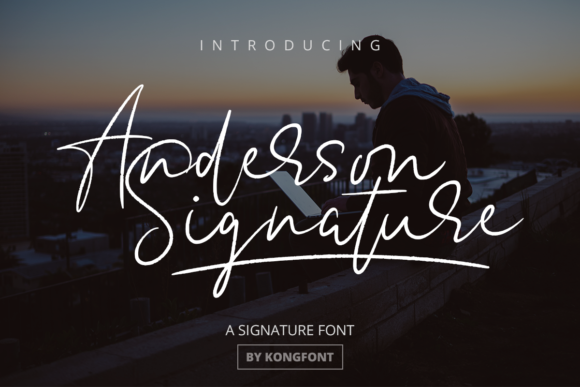
Anderson Signature: The Modern Script for Creative Projects
Finding a font that feels both personal and polished can be a real challenge. You want something with character, a handcrafted feel that doesn't look sloppy or overly formal. This is the sweet spot where a typeface like Anderson Signature shines. It’s a modern and playful script font designed to bring a touch of authentic, handwritten charm to a wide range of creative work. For designers, crafters, and entrepreneurs, it represents a versatile creative font that bridges the gap between casual and professional.
More Than Just a Pretty Script
At its core, Anderson Signature is a script font with a fluid, connected baseline that mimics natural handwriting. Its strokes have a gentle, varying weight, giving it an organic quality that feels both relaxed and intentional. The letters flow into one another with a rhythm that feels personal, as if written with a quality pen on textured paper. This isn't a stiff, formal handwritten font; it’s a modern typography take on the signature style, making it approachable yet sophisticated.
The personality of Anderson Signature is key to its appeal. It communicates warmth, creativity, and a human touch. This makes it an excellent display font for headlines, logos, and short bursts of text where you want to make an immediate emotional connection. It’s the kind of typeface that can make a brand feel more relatable or a project feel more bespoke. Think of it as the visual equivalent of a friendly, confident voice.
Practical Applications: Where Anderson Signature Works Best
The true value of any premium font lies in its application. Anderson Signature is particularly effective in projects that aim for a handmade, artisanal, or personalized aesthetic. Its strengths become clear when you consider its use across different mediums.
In logo design and brand identity, this font can set a distinct tone. It’s perfect for boutique businesses, lifestyle brands, wedding stationery, cafes, or any service that wants to emphasize a personal, craft-oriented approach. Paired with a clean sans serif font for body text, it creates a beautiful contrast that is both stylish and readable. The key is to use it for the brand name or a tagline where its unique character can be fully appreciated without compromising clarity in longer paragraphs.
For packaging design, Anderson Signature can elevate a product’s perceived value. Imagine it on a artisanal chocolate box, a skincare label, or a gourmet coffee bag. It instantly suggests care, quality, and a story behind the product. Similarly, in editorial design for magazines or blogs, it can be used for pull quotes, article titles, or section headers to add visual interest and break the monotony of standard body copy.
Digital applications are equally strong. It can make social media graphics stand out in a crowded feed, adding a personal touch to Instagram stories, Pinterest pins, or Facebook ads. For web design, it can be used sparingly for hero section call-to-actions or special announcement banners, provided it’s tested for screen readability. In print, it’s a natural fit for greeting cards, invitations, posters, and any design assets where a human touch is desired.
Working With Anderson Signature: A Practical Guide
Choosing a font is just the first step. Using it effectively requires some consideration. When evaluating if Anderson Signature is the right fit for your project, think about the overall message. Does your project call for a personal, friendly, and creative vibe? If the answer is yes, it’s likely a strong candidate.
One of the most significant advantages of this font is that it is PUA encoded. For those unfamiliar, this means all the special characters, swashes, and alternate glyphs are easily accessible through any standard software. You can use the Character Map on Windows or the Font Book on Mac to find and use these extras. This allows for great customization, letting you add unique flourishes to specific letters, creating a truly one-of-a-kind look in your logo design or headline.
Font pairing is crucial. Because Anderson Signature is a display font, it rarely works well for large blocks of text. Its strength is in headlines and short phrases. Pair it with a highly legible serif font for a classic, elegant feel, or with a geometric sans serif font for a more modern, clean contrast. The goal is to let the script font be the star while the supporting typeface ensures readability for longer content.
Always test for readability at the size it will be used. While beautiful, script fonts can become difficult to read if set too small, especially in digital formats. Ensure there is enough contrast and spacing. Finally, review the licensing. As a commercial font, understanding the terms is essential, especially for client work or products for sale. The license typically covers most standard uses, but it’s always good practice to verify for large-scale distribution or specific applications.
In the world of modern typography, Anderson Signature holds its own as a reliable and charming option. It’s a tool that, when used thoughtfully, can significantly enhance the emotional impact and visual appeal of a project. It doesn’t try to be everything to everyone; instead, it excels in its niche, offering a blend of playfulness and professionalism that many creators find invaluable. Whether you’re crafting a personal brand or designing packaging for a small business, this font provides a straightforward way to inject personality and warmth into your work.